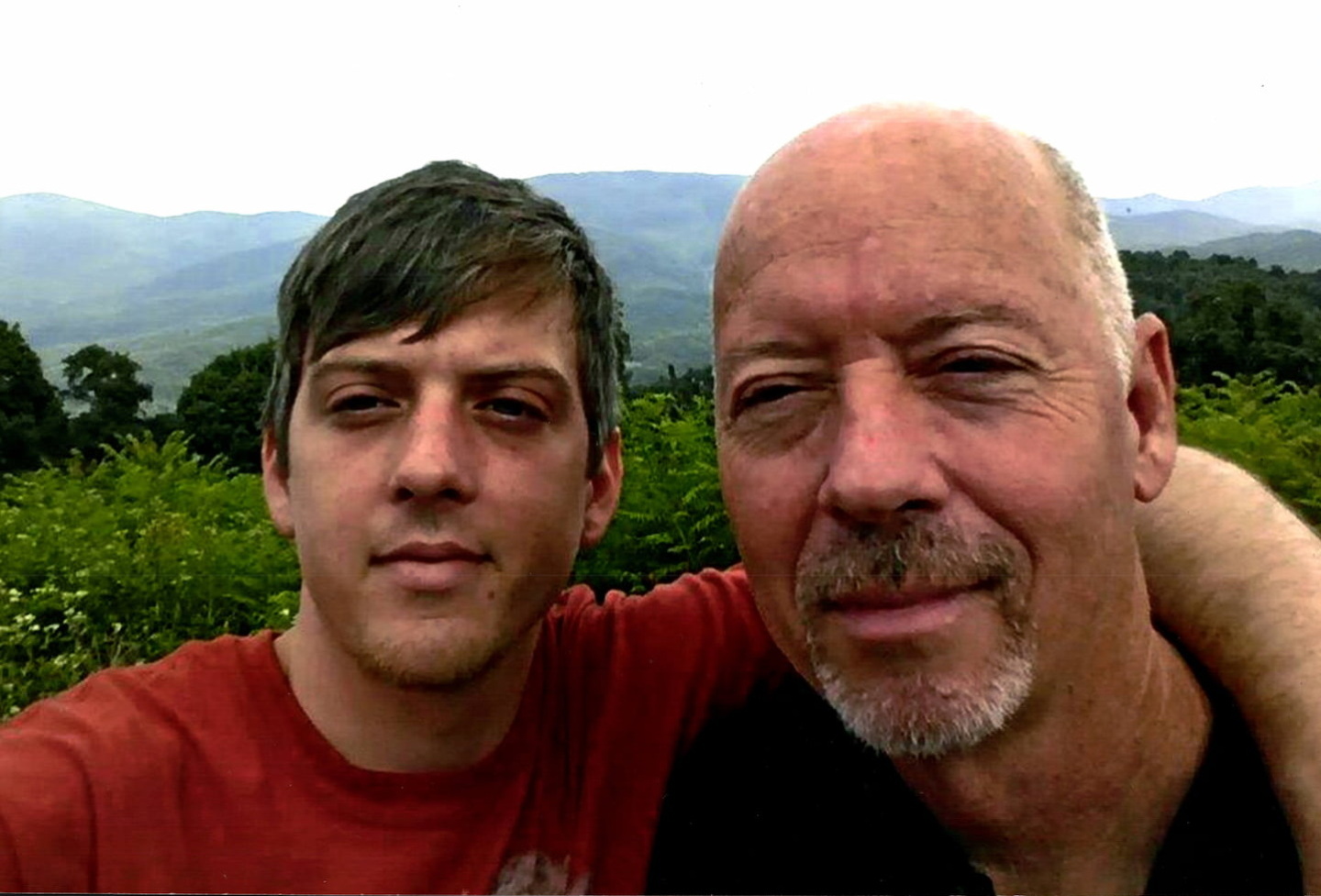
James Moore and his son, Jeffrey
James Moore and his son, Jeffrey
James Moore lost his son Jeffrey to a heroin and fentanyl overdose in 2015. Ever since, he’s been an outspoken advocate in his small Mississippi community, working to help those currently struggling with addiction, as well as other families navigating losses like his.
Below, James, in his own words, shares about the importance of ending stigma, practicing harm reduction, and supporting policies that take a health approach to addiction.
***
My son Jeffrey had so much kindness and compassion in him. When he was 6, I had him help me restore an old rusted-out Schwinn bicycle from the ‘60s. We stripped it down to the bare metal, applied new cherry-red paint, and installed new parts. And when it was done, he loved riding that bike around. I wanted him to learn that sometimes you have to look below the surface to see the value in something – or someone. Sometimes you have to invest some of your own effort to see the hidden value. And I saw him do both things throughout his life. He was always there for people who were the most in need of it. To this day, I meet former friends of his in recovery centers who tell me with a smile that Jeffrey was the only person that would give them the time of day.
But Jeffrey had some anxiety issues through the earlier part of his life. And we think he realized that substances maybe helped turn down the level of the anxiety. When he was 14, my wife and I discovered he was using marijuana. As time went on, it became obvious to us pretty quickly that he was using other drugs, and that he had not gotten through this addictive phase that we had hoped had passed.
I would lash out at him thinking that maybe it would knock it out of him. By his early 20s, he developed an opioid addiction. I didn’t realize he was just trying to get from one day to the next – using so he could keep coming into work and going to college.
I thought he finally got sober. But, I went over to his house one day, and I found a razor blade, some pill shavings, and a hypodermic needle. And I went into a rage.
At that point, I’d decided it was over, I was done.
And I just headed to the door. And Jeff called out to me, “Dad, you can’t just quit. You can’t just leave.”
At that point, I listened.
We got in the car, I said, “Let’s go find your mom, let’s figure out where we go from here.” He eventually came to us, and got into treatment, a 90-day inpatient program.
And as we began to visit him every Saturday, our relationship began to be healed. He began to feel he could be honest with us about his drug use, and about what his life was like.
I was beginning to understand the difficulties that he had had, and that his drug use was not about him being defiant. He really was just trying to survive.
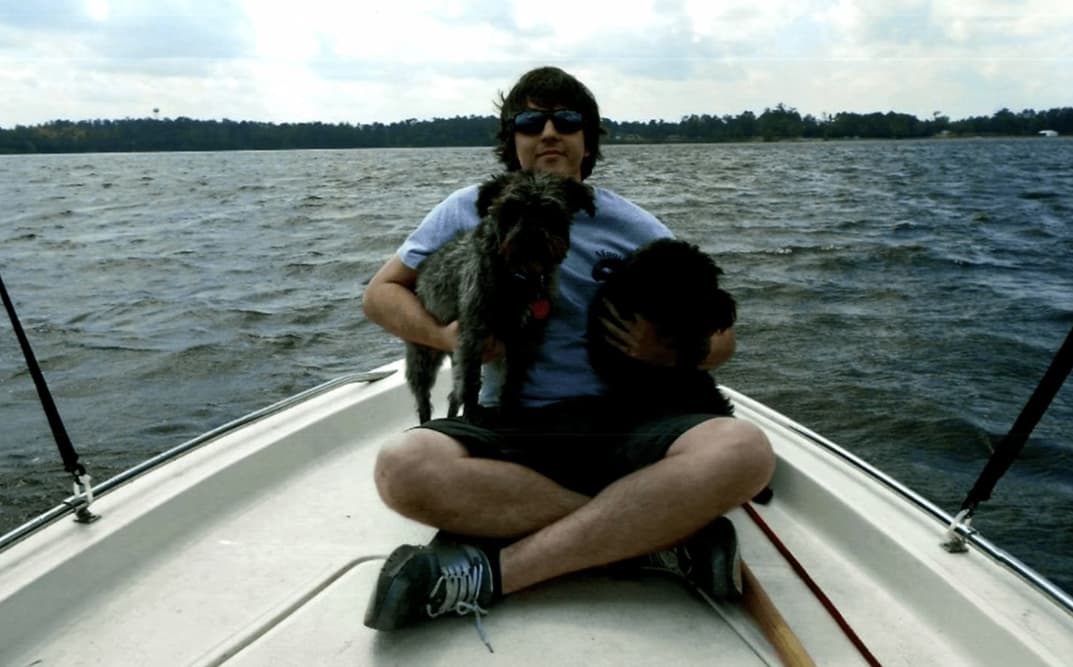
Jeffrey and his two dogs
But 60 days into the 90-day program, Jeff was kicked out – for nicotine. It was a smoke-free facility. He was caught four times with a cigarette. Our son was kicked out of treatment for smoking cigarettes, a legal substance that was helping him cope. And when we tried to get him into another program, insurance wouldn’t return our calls.
The morning after he was kicked out, he told me, “Dad, I’m gonna do this myself. You know, I’ve done some research. I’m gonna go to the NA meetings every day. I’m going to start seeing my counselor again.”
But 8 days later, I discovered him non-responsive. He had relapsed, and it was a heroin and fentanyl injection that took his life.
I lost my son.
After his death, I did a lot of reading, a lot of searching as a father to figure out why I got it wrong. What could I have done differently that might have made a difference? And if I could figure out some of these things, what could I do to try to help his friends, who were still out there struggling with addiction?
And my thinking on drug policy, and how we address addiction, really changed. Seeing the suffering and the struggling of my son, and others, showed me that punishment and shame just add further trauma, and does not bring people closer to recovery. But compassion and health supports do. We have to love each other, regardless of the behavior of addiction. So I became an advocate for keeping people alive without judgment, and trying to end stigma.
Through the many years my son Jeffrey struggled with addiction, we kept it a family secret. We were ashamed of it, afraid of how it might be seen in our small community. And I know that affected my son and how he saw himself.
After we lost Jeffrey, I realized stigma keeps people from seeking help. It sometimes keeps us from supporting them. And all that keeps people dying.
Soon after my son’s death, I went into a local billboard company’s office. I asked what it would cost to put an image of Jeffrey and me up on a billboard, with the message: “Addiction is a disease, not a moral failing. Seek help.”
And they said if I paid for the printing, it’d go up whenever a billboard was vacant.
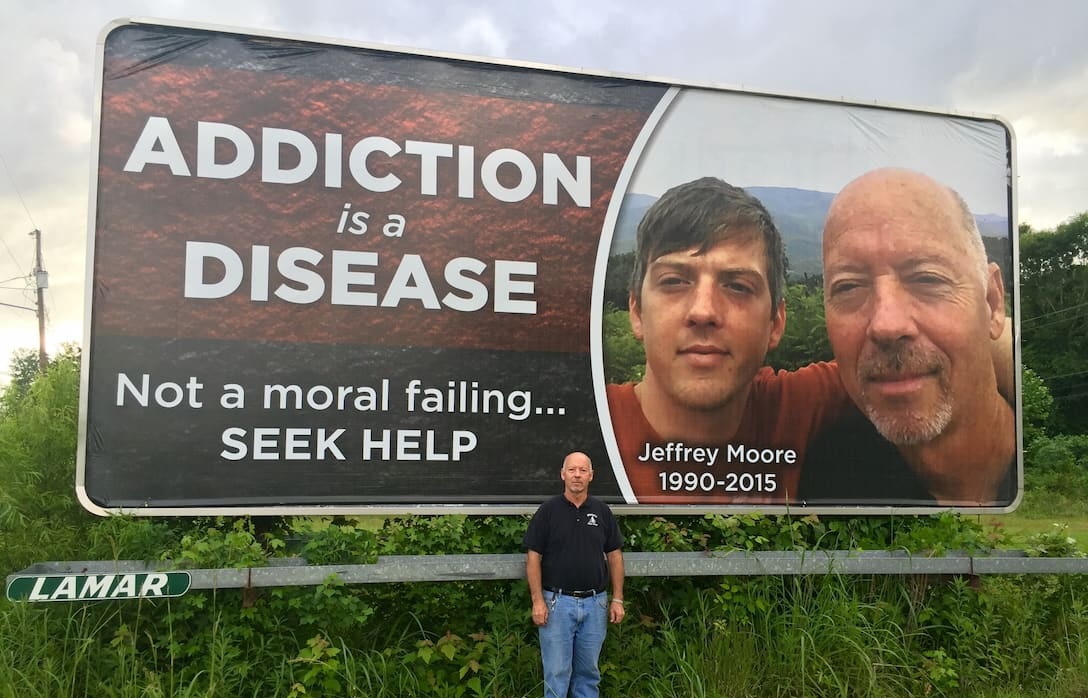
James in front of the billboard he created
And the day the first billboard went up, I received a message in my inbox that evening from a therapist.
It said, “I want you to know, I don’t know who you are, but I’ve received two referrals today because of a billboard out on Highway 98.” And those billboards expanded from our town to other states. I expanded my advocacy too, with PSAs on local TV, things like that. And I’ve seen a real change in our community. There’s openness now where there wasn’t before.
The other day, I was getting my car’s tires changed and a young man working there told me “I want to thank you for all that you’ve done. I’ve been in recovery for 6 years, I’m back with my family, I’ve got a great job here, and now I’m not so ashamed to even talk about my past as I might have been otherwise. Keep doing what you’re doing.”
Jeffrey relapsed and died just 8 days after being kicked out of inpatient treatment. At that time, no one told us that he would be at higher risk of a fatal overdose if he used again, since he had been sober for two months. And no one told us about naloxone and how it could reverse overdose. I was so angry when I found all of that out. I thought, if I had known about this, Jeff might still be alive.
As far as I see it, naloxone should be available to reverse overdoses in every place, in every possibility, to give everyone as many chances as they need to succeed.
My son died from an overdose of heroin and fentanyl. When fentanyl really came into the supply, I heard about more and more people dying. But I also heard that it was possible to test for fentanyl, and at least that way people could know before they used. So, even though at the time it was not legal, I decided to start giving out fentanyl test strips to people who wanted them. It was about saving lives right then and there. I didn’t have time to wait for the law to change.
Cuts to federal funding are literally a matter of life and death. That funding helps us get free naloxone into the hands of people who need it. Take that away, and you’re taking away people’s ability to reverse an overdose.
In our Mississippi town, we have two addiction treatment centers. One’s private – you have insurance or you have cash. The other is state-run, and I’d say 90% of the people there are on federal grants from SAMHSA – the Substance Abuse and Mental Health Services Administration. And we saw Trump tried to pull the grants for that. It would have cut treatment access for almost half the people in our area. It almost certainly would have led to the deaths of people who could no longer afford treatment.
Thankfully, the attempt to pull that funding didn’t work, thanks to advocacy from groups like the Drug Policy Alliance. I was so glad to see enough of Congress fight back in a bipartisan way and shut that down. But the administration has already cut nearly $1 trillion from Medicaid, which is the biggest source of addiction treatment in this country. They’ve cut over $300 million from overdose prevention programs. Damage is being done.
And they’re trying to cut even more. They want to pull federal funding for things like harm reduction, like fentanyl test strips. Why on earth would you say you want to protect Americans from fentanyl, and then make it harder to access a tool that helps people detect it and avoid using it?
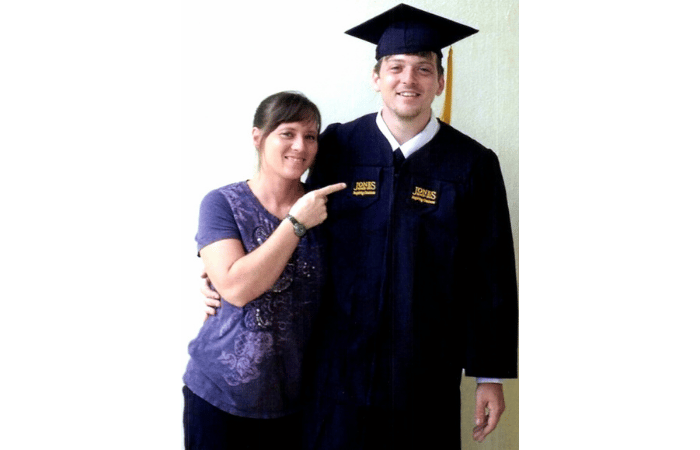
Jeffrey and his sister at his graduation
You know, I’ve heard people say, “You’ve got to let them hit rock bottom.”
Well, rock bottom is a cemetery. And dead people can’t recover, period.
Every decision we make – every policy we make – must be focused on keeping the person who is struggling alive. We have to keep them alive until they reach the point to where they’re ready to have a change. That means having naloxone available to reverse overdoses. It means making it possible for people to check their drugs with fentanyl test strips. It even means having overdose prevention centers, where people can use under supervision, be monitored for overdose signs, and be connected to care.
That’s not enabling drug use. It’s enabling survival.