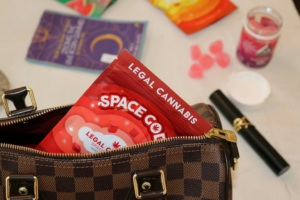
Across the U.S., 24 states have legalized marijuana for adult use, and public support continues to be strong—68 percent of Americans support making marijuana legal.
As marijuana laws continue to evolve, we must address new and emerging challenges. One growing concern is the increasing availability of high-THC products (including concentrates and certain edibles and beverages), especially without appropriate, right-sized regulations. As THC potency increases, so do important public health questions about safety, youth access, and consumer transparency.
At the Drug Policy Alliance, we take these concerns seriously. We believe legalization must be paired with thoughtful, evidence-based regulation that protects health, enhances safety, and reduces harm.
We spoke with Cat Packer, Drug Policy Alliance’s Director of Legal Regulation, to answer frequently asked questions about the challenges with high-THC marijuana products and the solutions needed to ensure consumer safety.
THC is the chemical compound responsible for marijuana’s “high” and is typically measured as a percentage or in total milligrams. “High-THC” marijuana products—whether flower, edibles, beverages, topicals, or concentrates—refer to products with relatively higher THC levels, though there is no universally accepted definition.
Some public health experts consider products that contain 35% or more THC to be high-THC marijuana products. Products at or above this level are already widely available in legal retail markets across the country.
There are a number of reasons why these products are more available today than, for example, 50 years ago. As folks say, “this is not your grandfather’s marijuana.”
With technological advances in marijuana cultivation, plants can be bred for specific strains and higher THC levels. Modern cultivation and extraction techniques also allow businesses to mass produce a variety of different product types – like flower, edibles, beverages, topicals, or concentrates – with much higher potency than was common decades ago.
Today, some consumers seek out higher-THC products—for example, to achieve more intense effects or to manage more severe symptoms such as chronic pain.
Moreover, commercial interests have increased the widespread availability of higher-THC products, in part due to customer demand. Marijuana businesses focus their inventories on customers who bring in the most revenue. And a relatively small share of consumers —about 20%— accounts for roughly 80% of sales. Because tolerance can develop over time, frequent users may increasingly seek out higher THC products, reinforcing this demand. As a result, many businesses are centering their marketing and advertising strategies to promote high-THC products.
At DPA, we believe that marijuana reform must center people’s health over business profits.
There is growing evidence that the more THC that’s in a particular product, the higher the risks and potential harms.
Risk levels depend on many factors, including frequency of use, product type, method of consumption, and how young someone is when they start consuming.
One of the larger mental health concerns is cannabis use disorder, where the use of cannabis disrupts normal life functions. There are also concerns that high-THC products may worsen or interact with existing mental health conditions for some individuals.
There are also physical health concerns, like the connection between high-THC products and cannabis hyperemesis syndrome (CHS). CHS is a condition that causes reoccurring nausea and vomiting that only eases when marijuana use stops.
Because of these risks, there is increased advocacy for banning products with high THC concentrations. While these concerns are understandable, banning and criminalizing these products simply pushes consumers who desire these products to illegal and unregulated sources. The reality is that many of the public health risks associated with high-THC products can be lessened through right-sized regulations and public health protections. These include policies like public and consumer education about potential health risks and rigorous product testing and labeling that clarify the specific THC potencies in each product.
Other safeguards include:
We need to use regulatory tools to make these products, particularly the products that folks are most concerned about, safer for folks to use, and kept away from youth.
One of the most effective ways to limit youth exposure to marijuana products is through the regulation of marijuana products and businesses. At DPA, we only advocate marijuana legalization for adult use.
Individuals should be over 21 to purchase marijuana or enter businesses selling marijuana. All marijuana products should be labeled for adult use only. And they should have child resistant packaging.
Other effective policies to limit youth exposure include restricting advertising to youth, limiting products that might appeal to youth, or even limiting certain flavors that have been found to appeal to youth. Public education, specifically peer-to-peer education, is also important to limiting exposure.
Finally, there’s also an element of parental and caregiver responsibility. Adults can help limit youth exposure by securing marijuana products at home and keeping marijuana locked away.
We must always put people’s health and wellbeing over corporate profits.
Legalization must be paired with right-sized regulations that prioritizes public health. Doing so at both the state and federal level would help ensure that there are consistent product safety standards and accurate research around marijuana.
Policymakers can also create or improve public health campaigns that provide accurate information in ways that are accessible and non-stigmatizing. Fear-based messaging often backfires, discouraging people from engaging with the information or speaking openly when they are struggling. Instead, public education should present clear information about both the potential harms of marijuana use and strategies to reduce risks. Prevention efforts should be prioritized for teens and young people, who are especially vulnerable to the effects of early and frequent use.
Policymakers should also continue to dedicate resources to community interests. This includes using marijuana tax revenue to invest in public health and community centered programs like parks, treatment, job training programs, and housing supports.
Lastly, no one should be arrested for marijuana and policies cannot return to bringing back harmful and ineffective criminalization tactics. Legal regulation must address the ongoing harms of criminalization that impede on someone’s livelihood and basic needs. At minimum, clearing records for all past marijuana arrests and convictions. Not having a criminal record removes barriers to economic opportunities and housing access. Ending criminalization also stops law enforcement from targeting certain communities. For example, Black people are 3.6 times more likely to be arrested for marijuana than white people nationally, despite similar rates of use. This disparity is even higher in many states.
DPA just released a report, “High-THC Marijuana: Protecting Public Health In A Changing Market”. You can download it here.