
Treatment

A man speaking with a therapist.

Addiction (Substance Use Disorder) Treatment

Addiction treatment can be life-changing, from therapy that builds coping skills to medications that ease cravings.

The best approach depends on each person—there’s no one-size-fits-all. Yet access is limited by long waits, high costs, and scarce evidence-based care.

Treatment should be voluntary, on-demand, and tailored, but it’s not always enough. For those also facing homelessness or mental health issues, housing and broader health care are critical.

Below is a brief overview of current treatment models, what’s working and what needs to improve.
What addiction treatment options exist?

Behavioral Therapy

This is the most widely used form of treatment and is available in most substance use disorder treatment facilities in the U.S. Behavioral therapy options can involve any combination of individual, couples, family, or group therapy.

Medication Options

Medications for opioid use disorder (MOUD), also known as Medication-Assisted Treatment (MAT), have proven to be the most effective forms of treatment for opioid use disorder for drugs like fentanyl, heroin, and prescription opioids like oxycodone.

MOUD alone is treatment, and it should not be required to be used alongside other treatment options.

There are currently 3 medications approved by the Food and Drug Administration (FDA) to treat opioid use disorders.

There are also medications that exist to reduce cravings for alcohol and tobacco. However, there are no FDA-approved medications yet for other types of drugs.

What are the different treatment settings?

Inpatient Treatment

Inpatient treatment provides intensive 24/7 support and services to patients, typically in a hospital setting, at the beginning of the recovery process. This type of treatment is for several days up to 28 days and may be best for people who have a long history of addiction, have co-occurring medical issues, may have been unsuccessful in other settings, and/or need a safe, stable environment.

Outpatient Treatment

Outpatient treatment can include a variety of settings where patients attend therapy for a period of time each week and return to their home or other supportive housing. Most outpatient programs require abstinence. This type of treatment may be best for those with a stable support system, who have a goal of abstinence, and/or need flexibility for work or family commitments. Outpatient treatment is the most commonly used and cost-effective form of treatment for substance use disorders.

Supportive Housing Programs

There are a number of supportive housing programs in the community for people seeking substance use disorder treatment or for those in early recovery. However, availability may vary in every community. Supportive housing programs include those that may be known as Sober Living Homes, Recovery Residences, or Transitional Housing. While many people benefit from the additional structure, especially people experiencing homelessness or housing instability, not all supportive housing programs are created equally. Far too many sober living homes are not regulated or licensed by the state, which means that they may not be subject to oversight to make sure they are safe and hygienic. In addition, they differ in staffing. Some are staffed by people in recovery and people without credentials, while others may have licensed professionals on site.

A note about treatment in jail and prison

Incarceration is not healthcare.

Addiction treatment has been intertwined with the criminal justice system for decades. This has created a situation where people advocate sending people to jail for struggling with drug use. But in jails and prisons, drugs are still available, effective treatment is rare, and overdose occurs.

People often cycle in and out of jail, ending up back on the street without meaningful care or support.

It’s unacceptable that every 35 seconds someone is arrested for a drug offense but will likely spend weeks waiting for a treatment spot when they seek it in the community. It should not be easier to get arrested than it is to get help when you need it.

While it’s important that treatment be available inside jails or prisons for those struggling with substance use, they are not treatment facilities and are not equipped to provide services that people need. Instead, our elected officials must work to ensure that treatment is available on demand and is free/low-cost when people seek it. No one should be arrested because care is limited and they are struggling with addiction.

FAQ


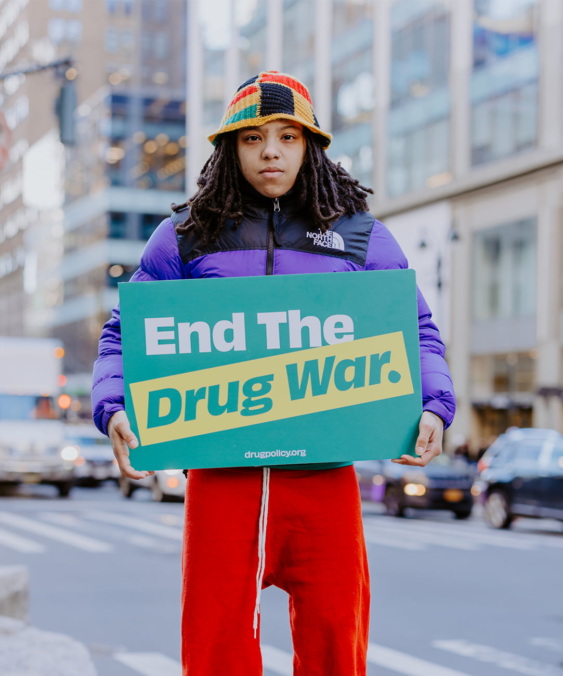
A young woman holds a sign that says "End the Drug War."

Sign up for updates from DPA.